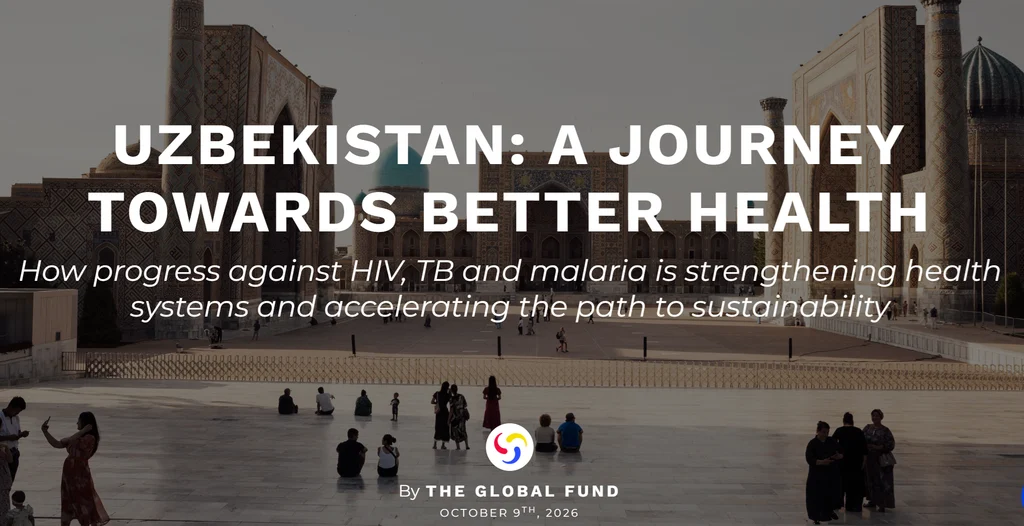
In a feature story published by the Global Fund, Uzbekistan is highlighted as a regional leader in the fight against HIV and TB, with progress increasingly underpinned by growing domestic financing as the country takes on a larger share of its health costs.
TB deaths have fallen by more than 75% since 2015 and new TB cases are close to being halved, while the success rate for multidrug- and rifampicin-resistant TB rose from 56% in 2015 to 81% in 2025, helped by shorter all-oral treatment regimens (as little as six months, down from up to two years) and video-supported treatment that lets patients record their own doses. TB Tracker Uzbekistan, a digital system launched in 2023 that links patient records, lab results and medicine supply data, is now used in every region and is being integrated into the national Digital Medicine patient registry; mobile TB-screening buses equipped with digital X-ray and AI-assisted detection screen 80–100 people a day in remote areas, prioritizing older people, migrant workers and people with chronic lung conditions, with about 4% testing positive. On HIV, nearly 50,000 people receive treatment, 91% of them with viral suppression, supported since 2011 by 14 multidisciplinary teams across all regions — combining clinicians with peer outreach workers living with HIV — that have served roughly 150,000 people with HIV and their relatives through medical and psychosocial care, including home visits. Uzbekistan was certified malaria-free by WHO in 2018, and authorities continue to guard against imported cases through border screening, testing of symptomatic travelers, and mosquito-control measures.